
Separate the opening, explanatory body and next-action module, then decide which component the test is intended to evaluate. Keep compatible modules and stable conditions for that comparison. Test whole concepts when needed, but do not interpret a multi-component change as proof about one isolated element.
Modular ads make production easier, but they can also create awkward combinations. A hook that promises a setup demonstration cannot be attached to a body that only discusses pricing. The structure must preserve a coherent argument before it becomes a useful experiment.
Step by step
Define the role of each module
The hook establishes relevance, the body explains or demonstrates the proposition, and the CTA directs the next action. Write the purpose of each in the source brief. Keep product claims and conditions attached to the module that uses them.
Choose the current test question
Decide whether you are comparing openings, explanations or next steps. Select the primary outcome that fits the question. A CTA test may need destination completion, while a hook test still needs downstream quality as a guardrail.
Lock the non-tested components
Use the same approved body and CTA for a hook comparison, for example. Record unavoidable differences in timing or layout. Keep destination and offer changes out of the test unless they are part of the stated question.
Check module compatibility
Read each complete combination aloud and inspect the visual joins. Repair missing referents, repeated setup and inconsistent promises. Reject a combination that requires a different body merely to make its hook truthful.
Produce labeled complete assets
Use Golpo's supported creation or revision workflow and assign module IDs to each export. Verify captions and timing after assembly. A test asset is the complete experience, not three independently approved fragments.
Interpret at the intended level
Compare qualified outcomes with delivery context and uncertainty. If several modules changed, describe a concept result. Save the module combination and exact script so future tests can preserve the parts that worked.
The workflow inside Golpo
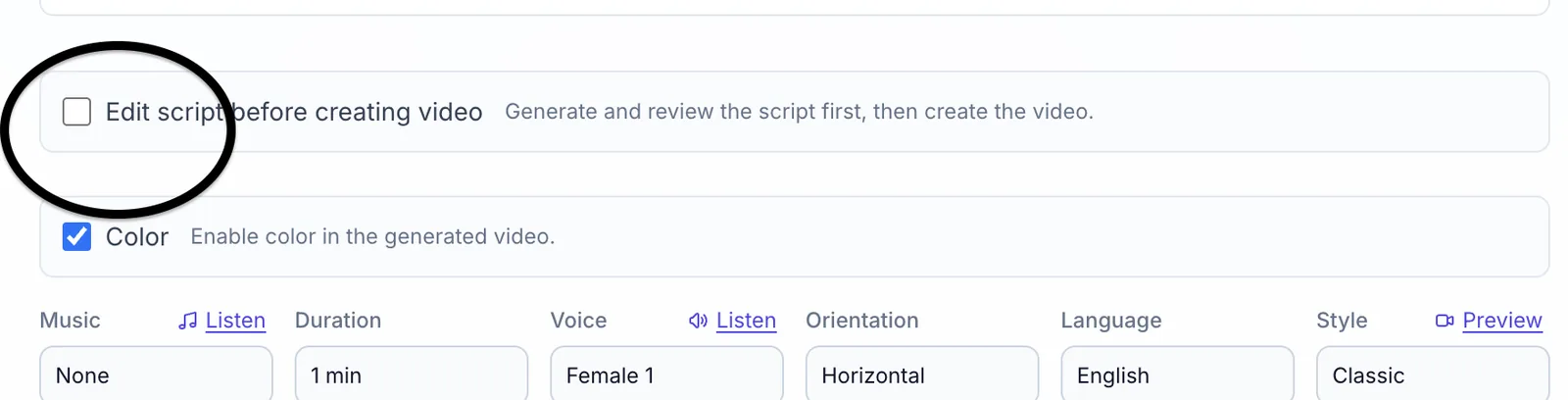
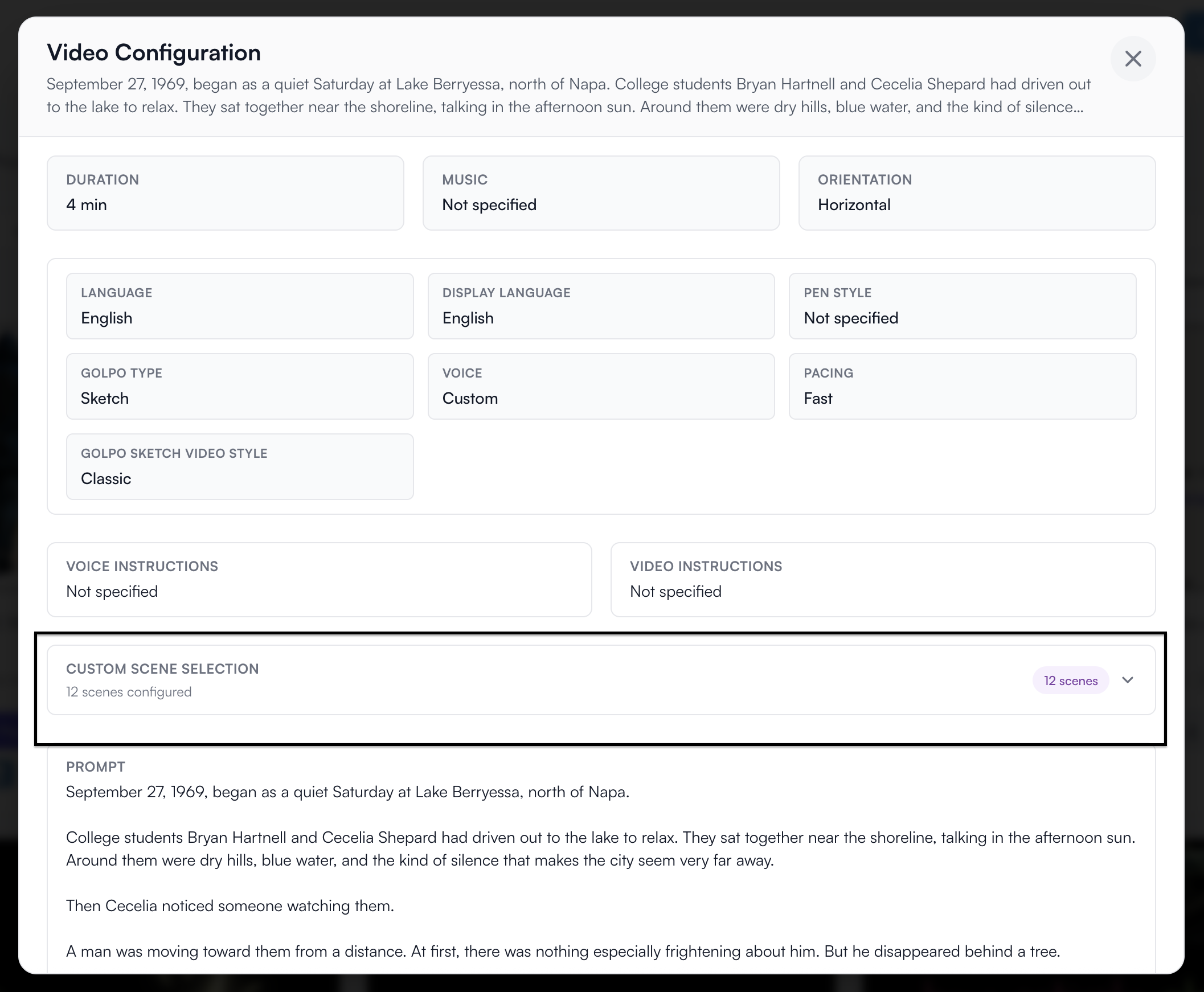
Use these real interface views to find the creation and review controls. Apply the decisions from this guide to your own brief, then review the resulting script and visuals before publishing.
Use sequential learning when capacity is limited
Explore a small number of broad bodies or angles first, then test openings around the most useful explanation, and later refine the next action. This is a practical planning approach rather than a statistical requirement. Choose the order based on the largest unresolved uncertainty.
Track interactions
A strong hook may work only with a particular explanation. Do not assume module performance transfers unchanged to every body and audience. Reused components still need a coherent complete-ad review.
A focused hook comparison
H1 and H2 attach to the same approved B1 body and C1 CTA. The asset identifiers preserve that relationship for campaign analysis.
Create a modular test brief for a fictional approval-tracking ad. Define H1 as an unclear-reviewer problem opening and H2 as an immediate assignment demonstration. Both must lead into the same B1 body explaining owner, reviewer and status, followed by C1 inviting a product tour. Keep the offer and destination unchanged. Check each complete combination for natural transitions and truthful promises. Provide asset IDs H1_B1_C1 and H2_B1_C1, list the intended test variable and identify qualified-outcome guardrails without predicting a winner.
Before you publish
- Module roles defined
- Test question chosen
- Other components locked
- Joins reviewed
- Combination IDs retained
Now, make it yours.
Start with a prompt, bring your script, or turn document text into a video.
You’ll review the setup in Golpo.
Sign-in and plan limits apply.
Your complete text is ready. It is too long to send reliably in a link. Copy it, open Golpo, and paste it into the prompt or script field.
Open GolpoCommon questions
Can I mix every hook with every body?
Only if the promise, context and transition remain coherent. Compatibility is a content judgment, not just a file-assembly operation.
What if two modules interact?
Treat that as a finding to investigate. Do not assume a component has one universal performance value across every combination.
Sources & useful reading
Published November 24, 2026. Product features and platform policies can change; linked official documentation is the source for current availability. Examples are illustrative production briefs.