
Write a story-driven script by connecting a clear character goal to obstacles, choices and consequences. Build the outline around change, then write narration and visual action together so every scene advances the story’s central question.
A story-driven script can explain a business process, teach a concept or entertain. The common structure is a person or system facing a problem that changes through action. Start with that movement rather than adding a fictional character to an otherwise unchanged lecture.
Step by step
Define the viewer’s question
Decide what the audience wants to know and why the story is a useful way to answer it. Write the central question and the final change. This keeps the narrative from wandering into attractive but irrelevant scenes.
Give the protagonist a concrete goal
State what they want in terms that can be observed. Add a constraint that creates a meaningful decision. The goal does not need enormous stakes; it needs to matter within the situation the audience understands.
Outline causal beats
Write the setup, attempt, complication, decision and consequence. Check that each beat follows from the previous one. Replace arbitrary coincidences with choices or mechanisms that fit the story’s rules.
Write action and narration separately
Describe what viewers see, then add only the words needed to interpret it. Use dialogue when it reveals character or conflict. Keep production instructions out of the spoken script so the final narration remains natural.
Revise the payoff and rhythm
Ensure the ending resolves the opening promise or transforms it deliberately. Cut repeated explanations and give important decisions room to register. Read aloud and ask a fresh reader where the story becomes confusing or predictable.
The workflow inside Golpo
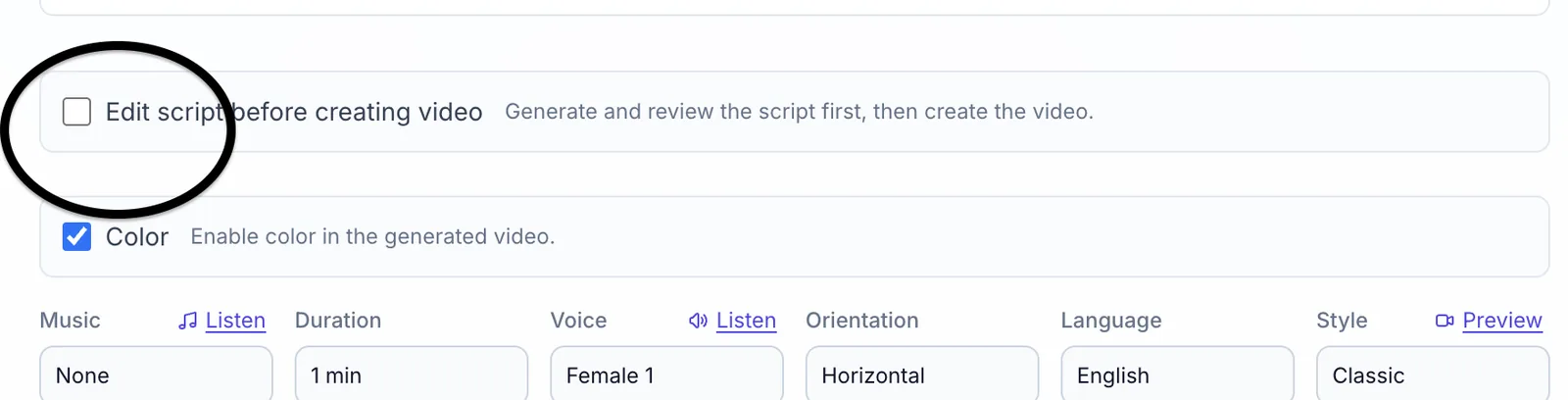
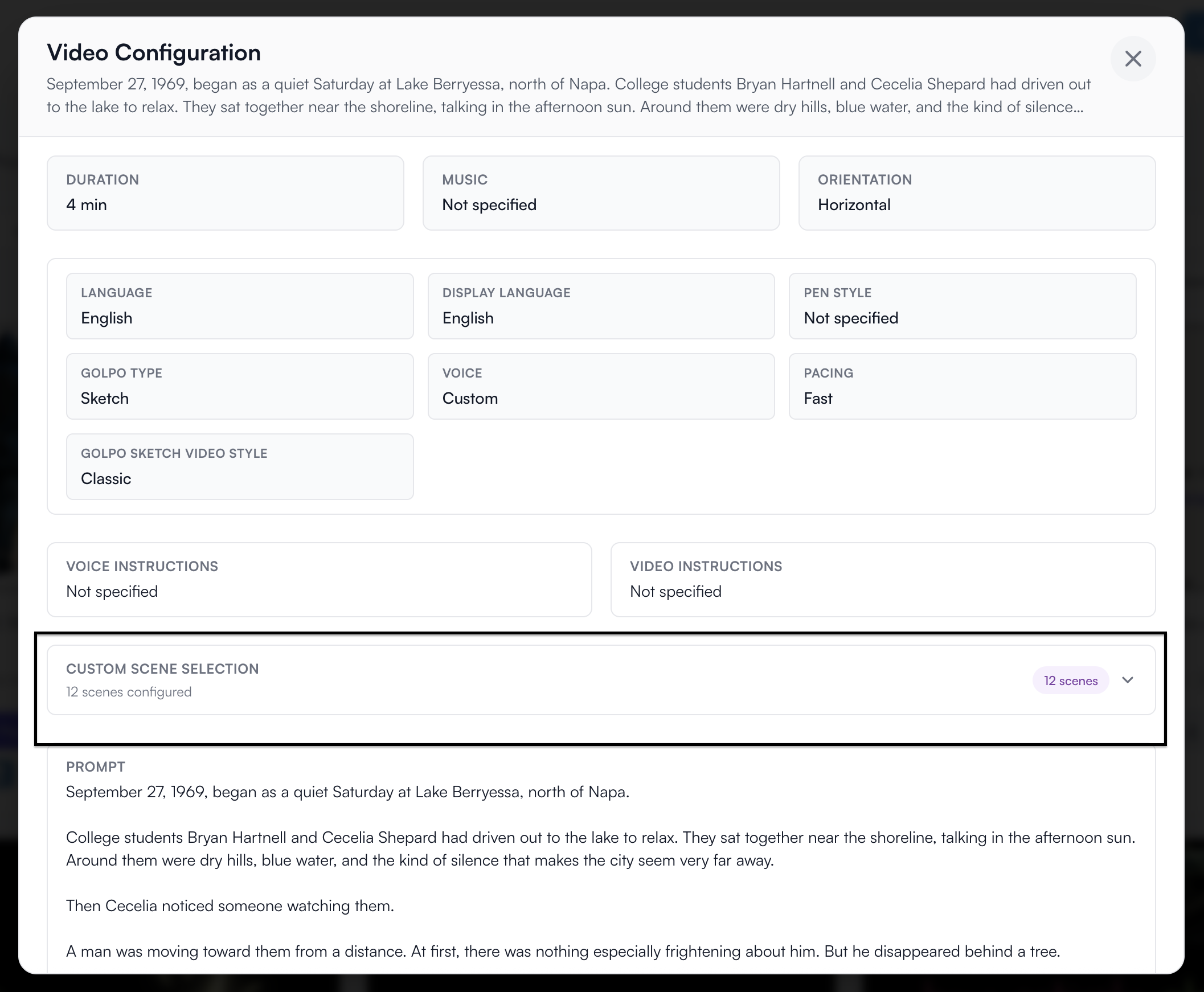
Use these real interface views to find the creation and review controls. Apply the decisions from this guide to your own brief, then review the resulting script and visuals before publishing.
Use the story to teach
In an explainer, the character’s problem can reveal why a concept matters. The solution should follow from understanding the mechanism, not from a product magically fixing everything. Keep the teaching claim accurate and the example clearly fictional when invented.
Plant details with purpose
A visual object, phrase or rule introduced early can make the ending feel earned. Avoid adding a detail solely because it looks interesting. Ask how it changes the audience’s understanding when it returns.
A missed-handoff script
A fictional team loses context between two departments. The protagonist tries a quick fix, encounters a consequence and changes the handoff process. The story teaches a specific communication principle through action rather than ending with an unrelated slogan.
Write a story-driven explainer about a fictional team losing information during a handoff. Define the protagonist’s goal, the constraint, an initial attempt, a meaningful complication and an earned solution. Make each beat follow causally. Use one planted visual detail that matters in the ending. Keep narration separate from action directions and avoid a magical product solution or unsupported performance claim.
Before you publish
- Clear viewer question
- Concrete goal
- Causal beats
- Separate action and narration
- Earned payoff
Now, make it yours.
Start with a prompt, bring your script, or turn document text into a video.
You’ll review the setup in Golpo.
Sign-in and plan limits apply.
Your complete text is ready. It is too long to send reliably in a link. Copy it, open Golpo, and paste it into the prompt or script field.
Open GolpoCommon questions
Can a business script use a fictional character?
Yes, when the example is clearly illustrative and does not masquerade as a real customer case or testimonial.
How do I avoid overcomplicating the story?
Keep one central problem and remove subplots that do not change the answer. A focused narrative is easier to explain and produce.
Sources & useful reading
Published November 24, 2026. Product features and platform policies can change; linked official documentation is the source for current availability. Examples are illustrative production briefs.