
YouTube permits AI voiceovers, but the video must still meet its content, rights, disclosure and monetization requirements.
An AI narrator is a production choice, not a complete policy assessment. The important questions are what the video claims, whether you have the necessary rights, whether synthetic content could mislead viewers and whether the channel contributes original value. Upload permission and eligibility to earn money are separate decisions. Review the current official rules before treating a successful upload as approval.
Step by step
Classify the voice use
Distinguish a generic narrator from synthetic audio that represents a real person or event. Ask whether a reasonable viewer could mistake the audio for an authentic recording. Keep a note of how the voice was created and what permission covers its use.
Review disclosure requirements
YouTube’s guidance addresses realistic altered or synthetic content. Apply that guidance to the actual video, including its audio and imagery. Do not assume every AI-assisted production needs the same disclosure, and do not assume a generic AI label excuses misleading content.
Check the substance of the channel
Review whether the video adds original research, explanation, commentary or storytelling. A voiceover placed on copied material does not automatically create sufficient original value. Look at the repeated format across the channel as well as the individual upload.
Verify rights and identity claims
Confirm permission for the script, music, footage and selected voice. Avoid presenting a synthetic celebrity or customer voice as a genuine endorsement. Save source and licence records so a future reviewer can understand what was created and what was licensed.
Publish with accurate context
Use truthful titles, descriptions and disclosures. Check the upload’s processing and any notices rather than assuming that publication guarantees future monetization. Revisit current requirements when the format or production method changes.
The workflow inside Golpo
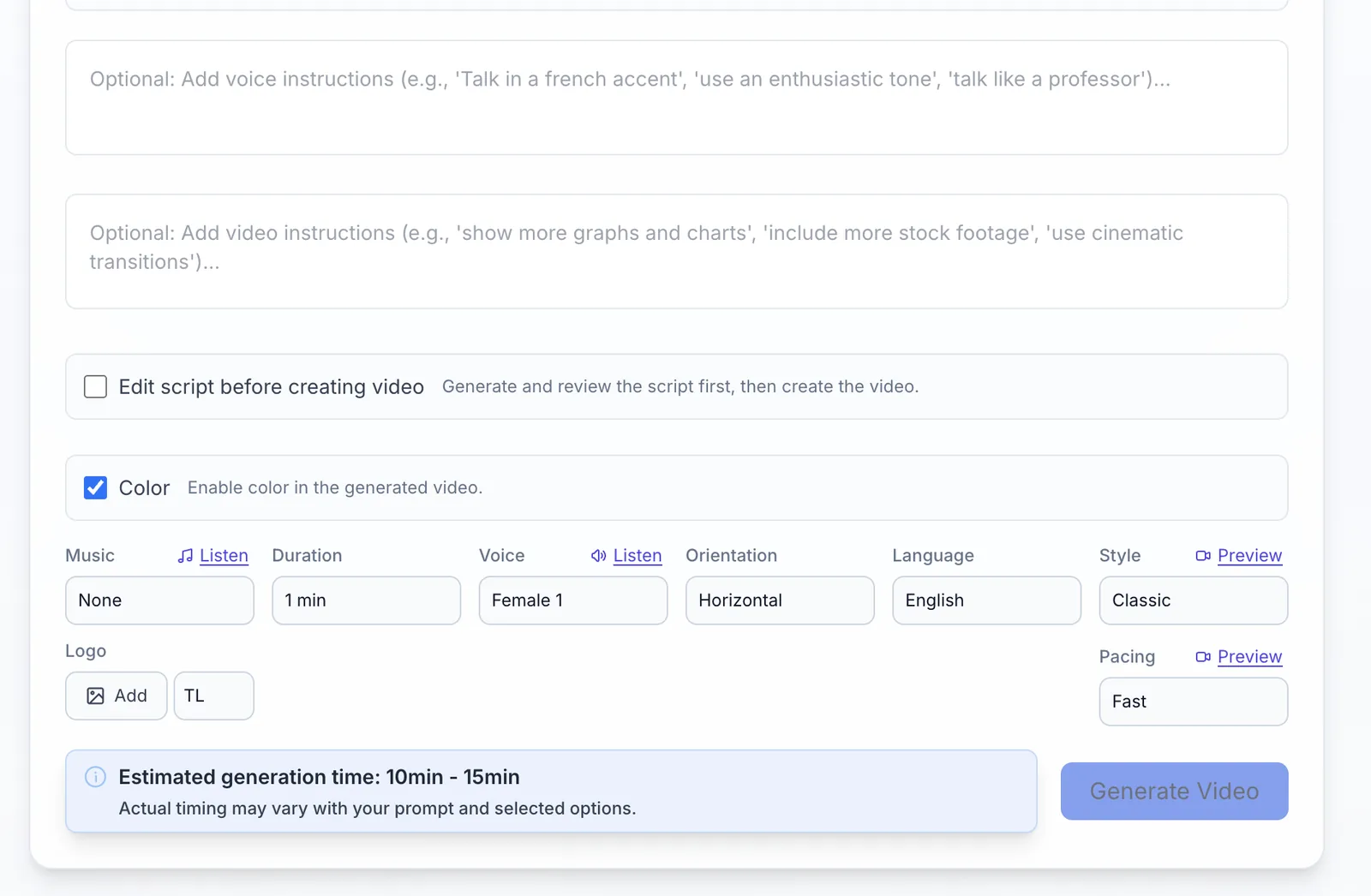
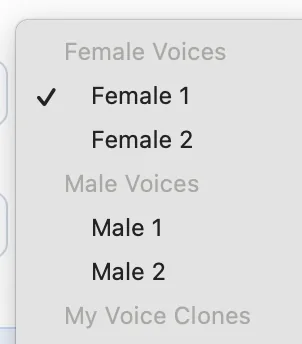
Use these real interface views to find the creation and review controls. Apply the decisions from this guide to your own brief, then review the resulting script and visuals before publishing.
What the policy distinction means
YouTube’s monetization guidance evaluates original and authentic content, including concerns about repetitive or reused material. That is different from a rule forbidding a particular narration technology. Build the channel around useful editorial work rather than trying to make a synthetic voice itself the reason for eligibility.
A practical production record
Keep the approved script, source list, voice provenance and a short note explaining disclosure decisions. This is useful project documentation even when no platform asks for it. It also helps a team apply the same standards across future uploads.
A narrated historical explanation
A creator uses a licensed generic AI narrator to explain a historical engineering problem. The visuals are clearly illustrative, the script is original and the description names the research sources. If the creator later adds a realistic synthetic speech attributed to a historical figure, that introduces a different disclosure and presentation question requiring fresh review.
Review this planned YouTube video for production-policy questions: [describe script, voice source, visuals and intended claims]. Identify items to check against the current official AI-disclosure, monetization and copyright guidance. Separate upload eligibility from monetization. Do not guarantee approval or invent an interpretation unsupported by the official text.
Before you publish
- Identify realistic synthetic elements
- Check current disclosure guidance
- Verify original contribution
- Record voice and media rights
- Separate uploading from monetization
Now, make it yours.
Start with a prompt, bring your script, or turn document text into a video.
You’ll review the setup in Golpo.
Sign-in and plan limits apply.
Your complete text is ready. It is too long to send reliably in a link. Copy it, open Golpo, and paste it into the prompt or script field.
Open GolpoCommon questions
Does an AI disclosure automatically prevent monetization?
YouTube’s guidance says disclosure itself does not remove monetization eligibility. The content must still meet the applicable rules.
Is adding my own AI narration enough to monetize reused clips?
Not necessarily. Review the complete work and the channel’s original contribution under the current monetization policy; narration alone is not a universal exemption.
Sources & useful reading
- YouTube AI disclosure guidance
- YouTube channel monetization policies
- YouTube copyright guidance
- YouTube Partner Program eligibility
Published November 24, 2026. Product features and platform policies can change; linked official documentation is the source for current availability. Examples are illustrative production briefs.