
Store hooks with their audience, problem, first-frame visual, promise and observed result. Organize them by the idea they test, not only by wording. A useful library helps the team choose a relevant opening and understand its limits; it is not a folder of copied phrases assumed to work everywhere.
A line such as 'Stop doing this' carries little meaning without knowing what follows. The first frame, audience and product mechanism determine whether the hook is useful. Capture those dependencies so future editors do not transplant an opening into an incompatible ad.
Step by step
Define a hook record
Include the exact line, first-frame description, audience, intended problem and transition. Add the product and offer context. A screenshot or clip can help, but it should not replace a written explanation of the promise.
Create meaningful categories
Group openings by problem recognition, demonstration, question, evidence or objection. Keep categories descriptive rather than calling everything 'viral.' Allow multiple tags when the concept genuinely spans categories.
Collect original and properly attributed references
Save your own hooks and public inspiration with source links. Do not copy another advertiser's wording, footage or distinctive presentation as if it were yours. Extract the underlying communication idea and write a new expression for your product.
Record claims and compatibility
Identify evidence required by the opening and bodies that can fulfill it. A hook promising a specific customer result should not be reused without the relevant approved proof. Mark expired offers and outdated product references.
Produce selected variants deliberately
Choose a few relevant hypotheses from the library and create reviewed versions in Golpo. Keep the first frame and transition aligned with the line. Assign IDs that can be connected to campaign assets and results.
Update with contextual evidence
Record delivery conditions, qualified outcomes and uncertainty. Label an untested hook as untested. Do not turn one campaign's result into a universal claim that the phrase will work for every audience.
The workflow inside Golpo
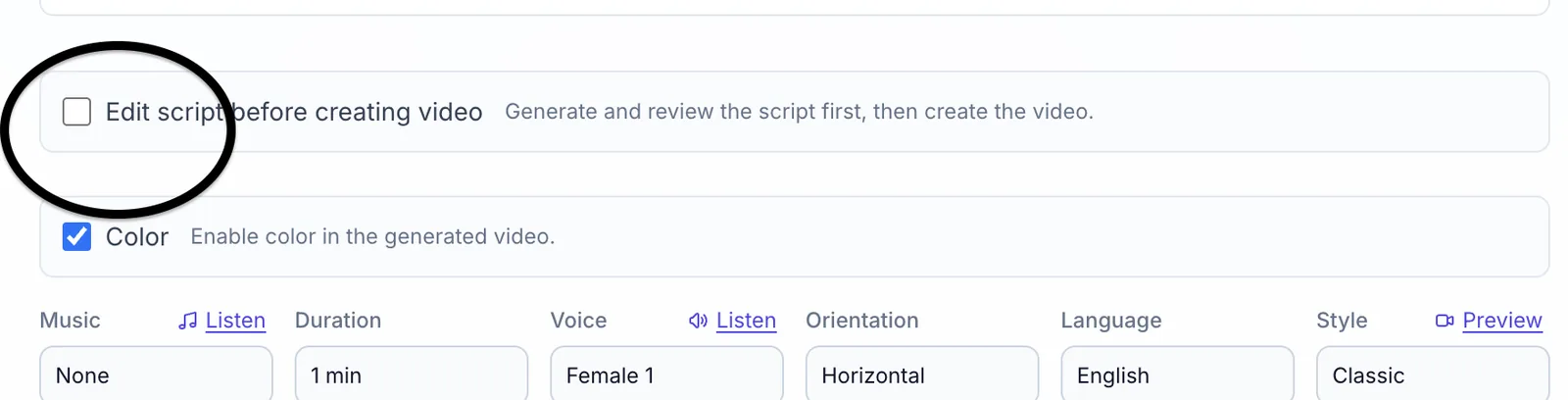
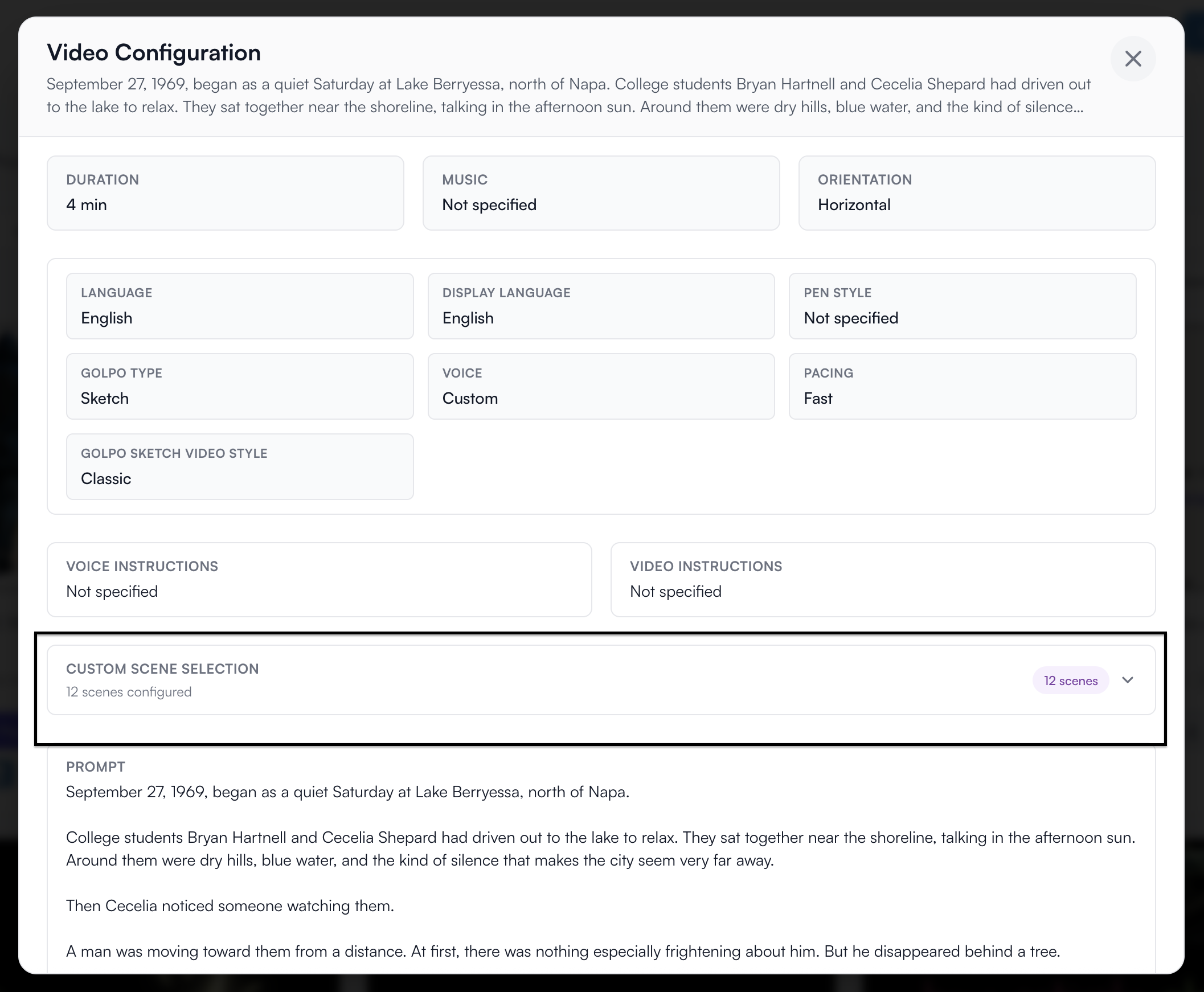
Use these real interface views to find the creation and review controls. Apply the decisions from this guide to your own brief, then review the resulting script and visuals before publishing.
Separate inspiration from evidence
A popular ad or long-running public campaign can inspire a structure, but visible longevity does not prove profitability. Keep reference observations separate from your own measured results. This protects the library from accumulating confident myths.
Prune and refresh
Archive duplicates and hooks whose underlying product claim is no longer true. Add new customer questions and product demonstrations as they emerge. A smaller well-described library is easier to use than hundreds of context-free lines.
A request-ownership hook record
The line asks who handles a request next, the first frame shows an unassigned card and the body demonstrates reviewer assignment.
Create a structured hook-library entry for a fictional approval-tracking ad. Hook line: 'Who handles this request next?' First frame: a request card with no reviewer assigned. Audience: project coordinators. The body must demonstrate the verified reviewer-assignment capability. Include tags, promise, required evidence, valid body modules, source-script version and an untested status. Propose two original alternative hooks with different approaches, but do not label them winners or invent performance data. Add fields for later campaign context and qualified outcomes.
Before you publish
- Context stored
- Categories meaningful
- Sources attributed
- Promise compatible
- Results honestly labeled
Now, make it yours.
Start with a prompt, bring your script, or turn document text into a video.
You’ll review the setup in Golpo.
Sign-in and plan limits apply.
Your complete text is ready. It is too long to send reliably in a link. Copy it, open Golpo, and paste it into the prompt or script field.
Open GolpoCommon questions
Should I save competitors' hooks?
You can keep public references for analysis, with source links. Use them to understand structure, not to copy protected assets or imply access to their results.
When is a hook a winner?
Only within a defined comparison and outcome, with sufficient evidence. Record the conditions and uncertainty rather than a universal label.
Sources & useful reading
Published November 24, 2026. Product features and platform policies can change; linked official documentation is the source for current availability. Examples are illustrative production briefs.