
Create a Spanish AI-voiceover video by choosing the intended audience, adapting the script and reviewing the spoken language and on-screen text.
Spanish-speaking audiences share a language, but vocabulary, forms of address and pronunciation vary. Decide whether you are creating for a particular country, a regional audience or a broad international audience. A clear production brief is more useful than calling one accent universally neutral. Build the narration around the words your viewers actually use.
Step by step
Choose the audience explicitly
Write down the intended market and tone. Decide how the narrator addresses the viewer and which terms need local adaptation. A product tutorial should remain consistent across narration, interface references and support documentation.
Adapt the meaning
Translate the explanation rather than its sentence structure. Check idioms, dates, numbers, measurements and examples. Preserve claims and qualifications from the original; localization should not quietly turn a cautious statement into a guarantee.
Audition a representative paragraph
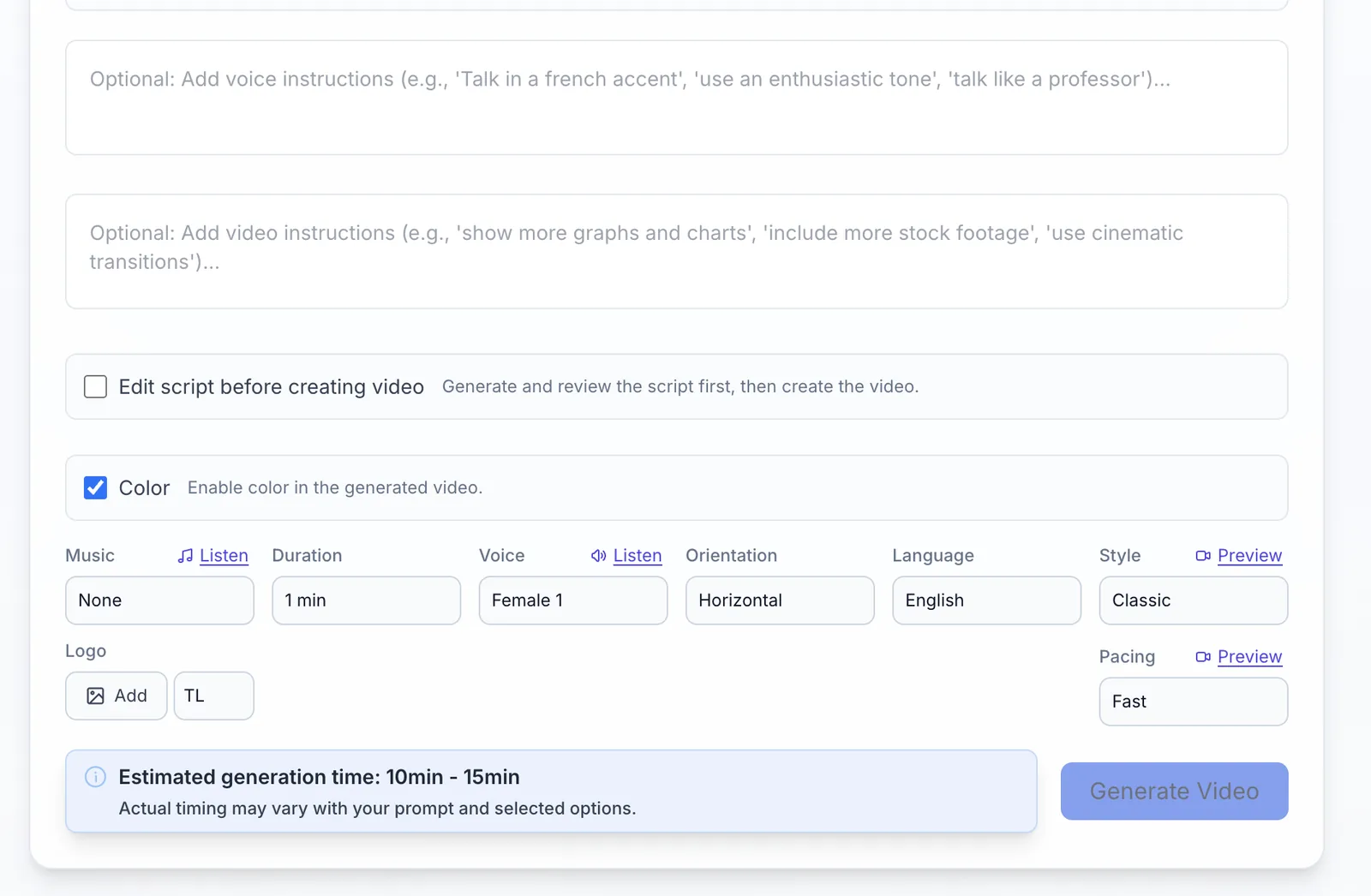
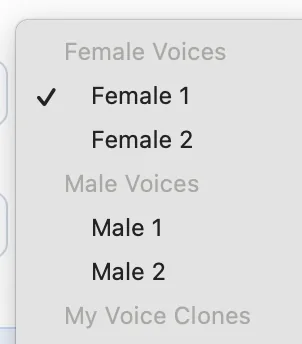
Include a product name, a question, a date and any borrowed English term. Compare voices using the same passage. Check that the selected voice and language are available in the actual plan and workflow you intend to use.
Approve with a fluent reviewer
Ask the reviewer to listen for unnatural stress, ambiguous references and vocabulary that feels out of place. Record the preferred terms in a glossary. Revise the script before generating the final visuals so the timing reflects the approved language.
Inspect the complete localized video
Review captions, diagrams, titles and the call to action. Spoken Spanish may take a different amount of time than the original, so retime scenes rather than forcing it into an unsuitable template. Check the final link and destination language as part of the viewer journey.
The workflow inside Golpo
Use these real interface views to find the creation and review controls. Apply the decisions from this guide to your own brief, then review the resulting script and visuals before publishing.
Avoid accent stereotypes
Select delivery for clarity and audience fit, not exaggerated cultural cues. A business explainer usually needs a credible explanation more than a theatrical performance. When people disagree about a regional preference, document the target audience and ask a relevant reviewer to resolve it.
Treat localization as a version
Keep the source script, approved Spanish script and exported media together with a version date. If a product fact changes, update every affected language. A beautiful translation of outdated information is still an inaccurate video.
Localizing a subscription explanation
A software company adapts an English subscription guide for Spanish-speaking customers. The team checks how its interface names the account and billing settings, then uses those exact approved labels in the video. A fluent reviewer adjusts the narration’s rhythm and the editor extends the scene where the cancellation process is explained.
Adapt this approved script for a Spanish-speaking audience in [target market]: [paste script]. Preserve every product fact and qualification. Use a consistent form of address, natural spoken phrasing and terminology that matches the supplied interface glossary. Return narration, localized on-screen labels and a list of questions for a fluent reviewer. Do not invent features or regional claims.
Before you publish
- Name the target audience
- Preserve factual meaning
- Match interface terminology
- Review pronunciation with a fluent speaker
- Update captions and destination links
Now, make it yours.
Start with a prompt, bring your script, or turn document text into a video.
You’ll review the setup in Golpo.
Sign-in and plan limits apply.
Your complete text is ready. It is too long to send reliably in a link. Copy it, open Golpo, and paste it into the prompt or script field.
Open GolpoCommon questions
Is one Spanish voice suitable everywhere?
It may be understandable across markets, but suitability depends on vocabulary, tone and audience preference. Test with the intended viewers.
Should I keep the original timing exactly?
Preserve important visual events, but let the approved translation determine natural pacing. Adjust scenes when the new narration needs more or less time.
Sources & useful reading
Published November 24, 2026. Product features and platform policies can change; linked official documentation is the source for current availability. Examples are illustrative production briefs.