
Write narration and visual action together. Begin with a clear audience question, develop the answer through concrete examples, and use a spoken read to check clarity, timing, and transitions before production.
A faceless script has two tracks: what the audience hears and what it sees. Writing only the narration often leaves the visuals as decoration. Start with the explanation or story you want to communicate, then give each scene a visible job. The script should tell a production tool or collaborator what needs to happen, not merely name a topic.
Step by step
Write the audience question and payoff
State the viewer’s starting knowledge and the answer the video will deliver. Keep this sentence visible while drafting. For a software explainer, the payoff may be understanding when to use a shared inbox. Remove material that serves a different question unless it is necessary context.
Outline the reasoning in beats
Use a small sequence such as problem, mechanism, example, limitation, and takeaway. Each beat should change the viewer’s understanding. For a story, use goal, obstacle, choice, consequence, and resolution. Choose the structure that fits the content rather than applying one formula to every video.
Draft natural narration
Use concrete nouns, active verbs, and sentences that sound comfortable aloud. Introduce specialist terms only when needed and explain them in context. Read the draft before polishing it. A sentence that looks elegant in a document may be difficult to speak or understand at normal listening speed.
Add a visual column
Specify the object, action, label, and transition for each beat. “Show teamwork” is vague; “three requests move into one shared queue, each assigned to a named owner” is actionable. Reuse objects when they help continuity. Do not add a new scene simply because the paragraph ends.
Revise against timing and evidence
Time a spoken read, including pauses for diagrams. Check every material claim and mark illustrative examples clearly. Remove repeated setup and unsupported certainty. Save the approved script separately from later production notes so corrections do not accidentally alter the intended narration.
The workflow inside Golpo
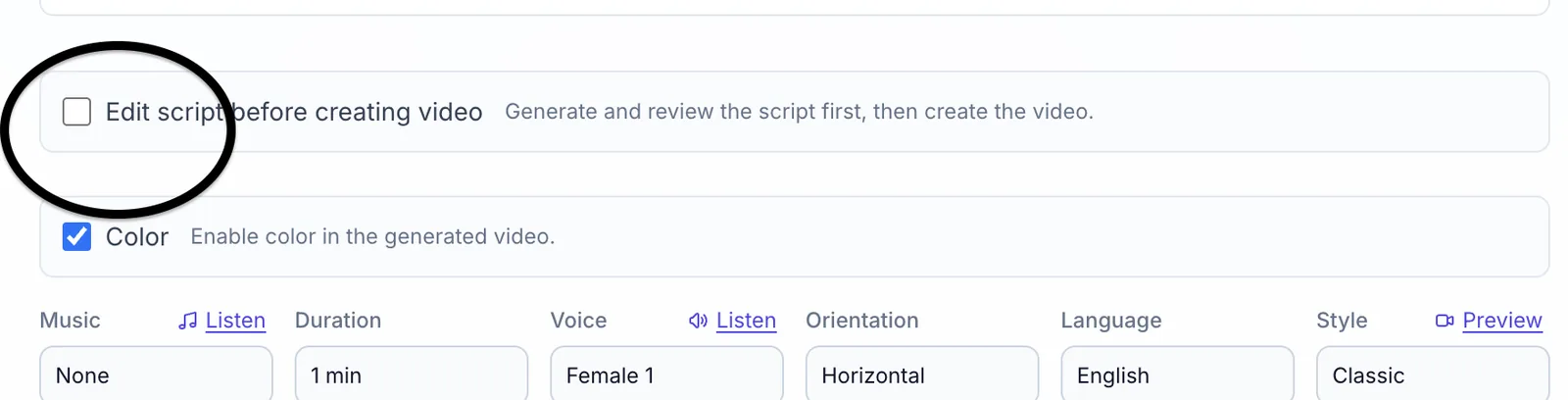
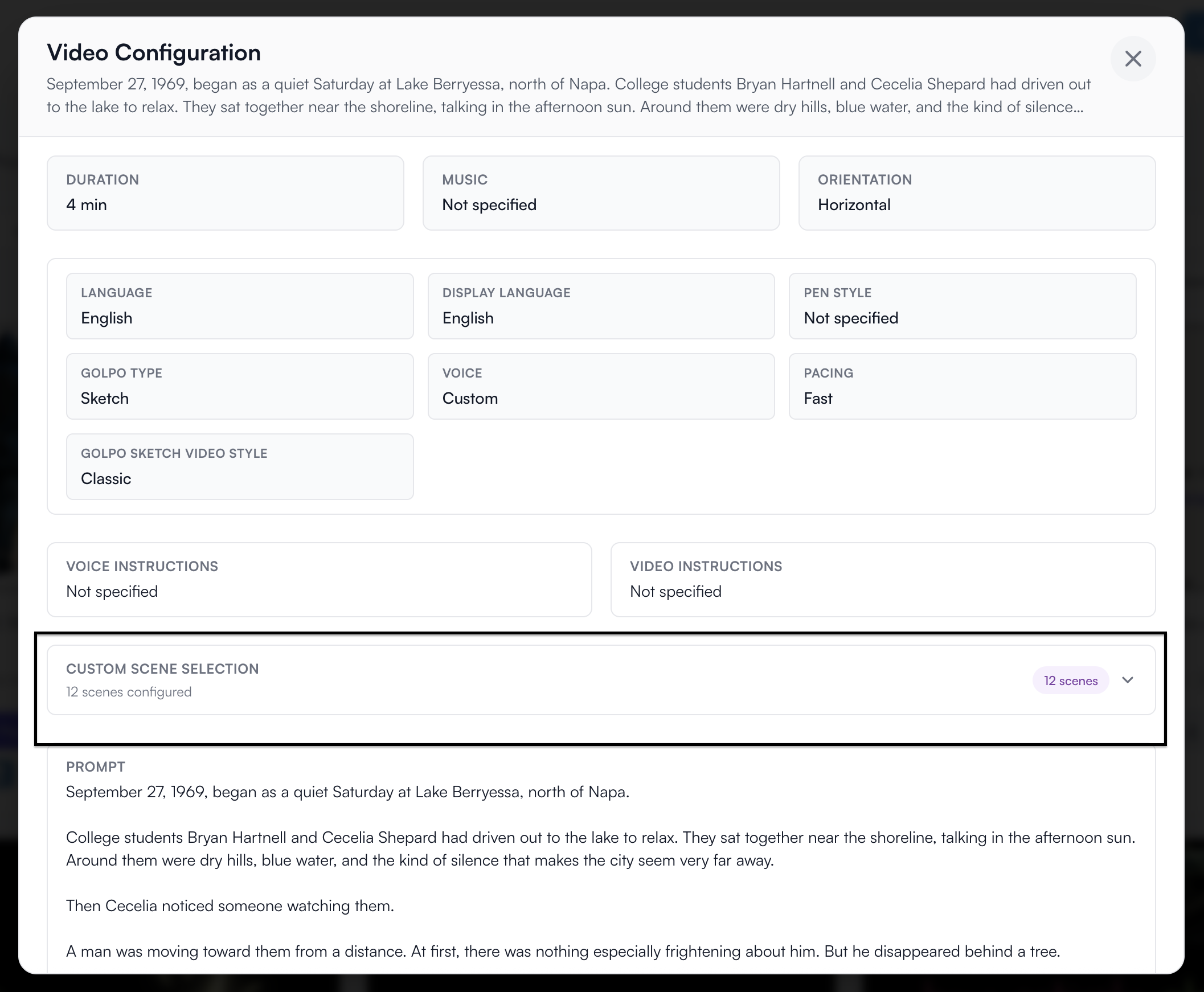
Use these real interface views to find the creation and review controls. Apply the decisions from this guide to your own brief, then review the resulting script and visuals before publishing.
Separate narration from production instructions
Keep directions such as “highlight the second box” outside the words intended for the voiceover. If using script-only input, confirm that only the narration is placed in the relevant field. A clean script reduces the risk of a tool reading editorial notes aloud or interpreting them as content.
Use revision questions with a purpose
Ask whether the opening earns attention, whether the example clarifies the mechanism, whether a beginner can follow the terms, and whether the ending resolves the promise. These questions produce more useful edits than a generic request to make the script more engaging.
Worked example: a shared-inbox explanation
The script follows one customer request through receipt, assignment, and reply. The narration explains responsibility while the visual column shows the request moving between stable boxes. A final scene illustrates what happens when no owner is assigned.
Write a two-column script for a 90-second faceless explainer about a shared customer-support inbox. Audience: a small team currently forwarding emails. Include problem, mechanism, one worked request, a limitation, and takeaway. Separate narration from visual instructions. Use concrete actions and avoid claiming a specific productivity improvement without evidence.
Before you publish
- Question and payoff defined
- Beats progress logically
- Narration read aloud
- Visual actions specific
- Production notes separate
Now, make it yours.
Start with a prompt, bring your script, or turn document text into a video.
You’ll review the setup in Golpo.
Sign-in and plan limits apply.
Your complete text is ready. It is too long to send reliably in a link. Copy it, open Golpo, and paste it into the prompt or script field.
Open GolpoCommon questions
Should I write the title first?
A working title can clarify the promise. Revise it after the script is complete so it accurately reflects the delivered explanation.
How long should sentences be?
There is no fixed limit. Read them aloud and simplify any sentence that requires the listener to hold several qualifications before reaching the main point.
Sources & useful reading
Published November 24, 2026. Product features and platform policies can change; linked official documentation is the source for current availability. Examples are illustrative production briefs.