
Choose a deep male AI voice by testing clarity, warmth and audience fit, then build the video around its natural delivery.
A low voice can suit a calm documentary, an atmospheric story or a measured brand explanation. Depth alone does not make narration authoritative. The useful test is whether listeners understand the words and trust the presentation of evidence. Avoid forcing a voice into an extreme pitch range or using resemblance to a real person as the creative brief.
Step by step
Describe the performance
Specify the purpose: reflective, reassuring, dramatic or instructional. Add the audience and subject. A calm documentary narrator and a horror character may both have low voices but need very different pacing and emotional range.
Audition for intelligibility
Use a script with quiet phrases, consonant-heavy words and a few numbers. Listen on phone speakers as well as headphones. A voice that sounds rich in a studio demo may become muddy when the audience listens in an ordinary environment.
Choose a legitimate voice
Review the available voice options and usage terms. Select a voice for its qualities rather than asking for an imitation of a celebrity. If a custom voice is involved, confirm the relevant permission and the permitted uses before production.
Write for the chosen delivery
Give important statements room to land without stretching every sentence. Use short, concrete phrases and varied rhythm. Save very dramatic pauses for meaningful moments; constant suspense can make a simple tutorial feel unintentionally theatrical.
Balance and review the video
Keep music from masking the lower part of the narration and check that captions match. Review the complete piece at an ordinary volume. In Golpo, verify the available voice controls and audition the actual voice before committing to a long generation.
The workflow inside Golpo
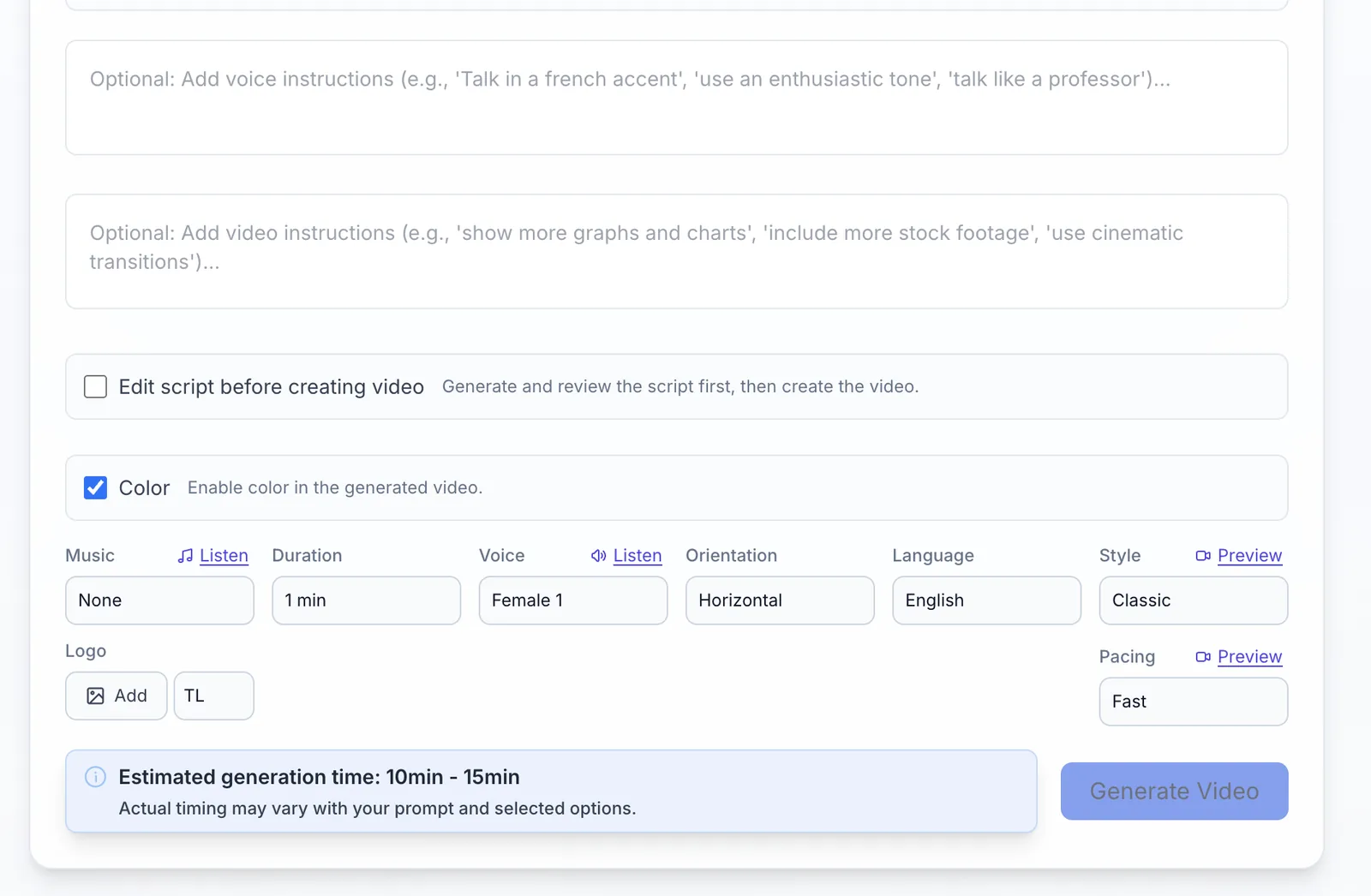
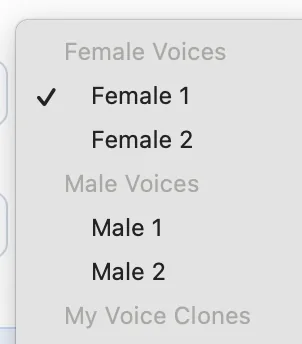
Use these real interface views to find the creation and review controls. Apply the decisions from this guide to your own brief, then review the resulting script and visuals before publishing.
Do not confuse pitch with credibility
A confident voice can make weak evidence sound persuasive. Keep claims, sources and uncertainty visible in the script. If a narrator discusses a sensitive topic, use a measured delivery that supports understanding rather than manufacturing certainty.
Avoid unnecessary processing
Lowering pitch after generation can alter articulation and make the performance sound unnatural. Start with a suitable voice and make small, purposeful adjustments. Compare the processed and original versions without assuming the darker one is automatically better.
A calm engineering documentary introduction
A creator opens a short film about a fictional bridge design challenge. The narrator calmly introduces the constraint, then the drawings show the competing forces. The voice uses a slightly slower pause before the central question, but the technical explanation stays crisp. The atmosphere comes from pacing and visuals rather than an exaggerated rumble.
Write a 60-second documentary-style introduction about a fictional bridge-design challenge. Delivery: calm, warm and low-pitched, with clear articulation. Introduce the setting, one engineering constraint and a question the video will answer. Keep narration separate from sound and illustration directions. Do not imitate a named person or invent real-world engineering statistics.
Before you publish
- Define the performance goal
- Audition on ordinary speakers
- Verify voice-use rights
- Preserve clear consonants
- Keep claims independent of vocal authority
Now, make it yours.
Start with a prompt, bring your script, or turn document text into a video.
You’ll review the setup in Golpo.
Sign-in and plan limits apply.
Your complete text is ready. It is too long to send reliably in a link. Copy it, open Golpo, and paste it into the prompt or script field.
Open GolpoCommon questions
Should I lower the pitch of any voice?
Start by auditioning voices that naturally fit the brief. Strong pitch changes can damage clarity and consistency.
Is a deep voice better for every channel?
No. Audience fit, intelligibility and the emotional demands of the topic matter more than a single vocal characteristic.
Sources & useful reading
Published November 24, 2026. Product features and platform policies can change; linked official documentation is the source for current availability. Examples are illustrative production briefs.